Tuesday, 2 April 2013

Research


Frank T. Hopkins Memoirs
(The Ocean of Fire)

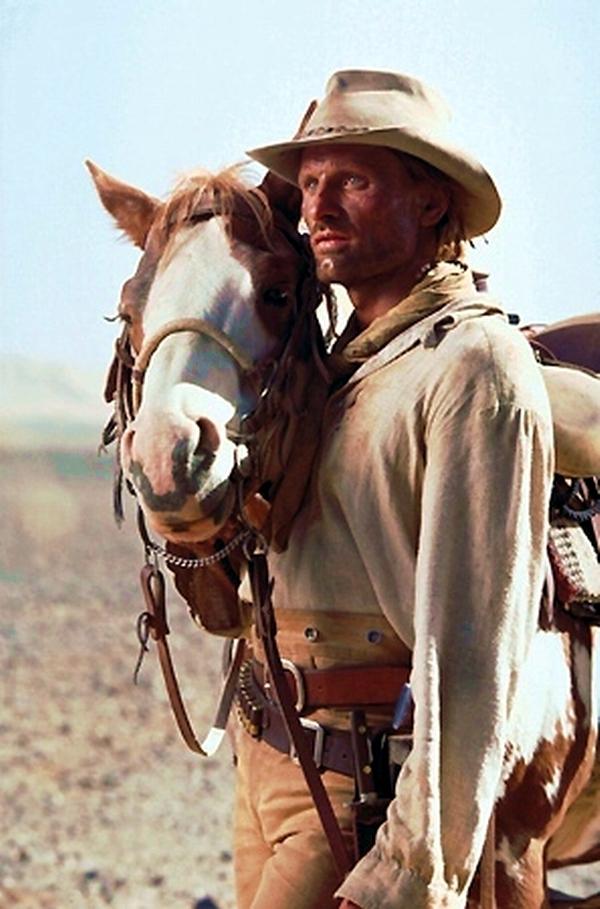
Frank Hopkins (1865-1951) was an American horseman made famous by his endurance racing career. He was said to have won over 400 long-distance races in his time, which includes the 3000 mile long race across the Arabian Desert in 1890. This race was completed on his most famous horse, Hidalgo, a Mustang Stallion. The race that interested me the most from Franks life was the great Ocean of Fire race, based in Saudia Arabia. This 3000 mile long race challenged riders to their limits and the scorching heat and sandstorms challenged riders in ways completely different to the challenges of endurance racing in America.

“Slightly over l00 horses started the ride from Aden in 1890. The great caravan of skilled riders had picked their best horses for the ride. Even in the mass of horses Frank's parti-coloured stallion stood out among the solid coloured Arabian horses.

The ride progressed along the Gulf of Syria, then inland along the borders of the two countries. Much of the ride, according to one of Frank's letters, and a letter to the author some years ago from Mrs. Hopkins, was over limestone country. The only feed available was called vatches, a plant that proved to be very nourishing. Camels accompanied the horsemen and carried barley for the horses. Water was scarce at times, and occasionally horses were without a drink for two days. Sandstorms hampered the riders, and when they were too intense, the ride was halted.”

“By the second week of the ride Frank made his move to surge ahead. As always, he started slowly to accustom his horse to the road. By now the hard ride, the elements, and small amounts of feed had eliminated the less able horses. Day by day the string of riders dwindled as the leaders kept well ahead. Each day Frank urged Hidalgo to a faster pace and finally took the lead. The camel train was now spread all over the route in order to supply provisions for the horses.

On the 68th day, Frank and Hidalgo reached the finish stone of the 3,000-mile ride. Hidalgo had lost considerable weight, but Frank had Hidalgo rested and well fed when the second rider reached the finish stone 33 hours later. Only three other horses technically finished the race. 
The Arabian horsemen praised Hidalgo for this wonderful performance.”

As well as studying Franks memoirs, I also had a look at the film Hidalgo, based solely off these memoirs. It features his journey across to Saudi Arabia and his race throughout this land.

Here is a collection of reference images:


Monday, 1 April 2013

CS Games Analysing: Spore


Spore

Spore is a Sim-type creationism game, created to give players an experience of creating a creature from a cell stage and helping it evolve. It was created by EA, and released in 2008 for PC, MAC, Nintendo DS and Mobile. EA is well known for its unusual games which give the player a chance to control another beings life, for example The Sims. EA also have strong colours and environments in their games, and Spore is no exception. Spore is a game aimed at ages 12 and up, due to its theories and conflict, and also its creationism. Teenagers will be drawn to this game more than adults due to the popularity of Sim games and creative games with this age group.


The conflict in this game is very natural as it is merely a conflict for survival. The conflicts found in this game are means to kill and eat other animals, or to create territory. It is conflict found in everyday nature and give the game a sense of realism and survival of the fittest. The struggle in the game is only your own, as other players are not in the same world as you. The game creates creatures in the players world that will lead to conflict, leading the player to battle against them.


There is a significant amount of interaction in this game, the main part would be the customisation of the creatures. There is a substantial amount of customisation options for the player to choose from, making the creature that each player makes being unique. The player can also control their creatures, making their survival decisions for them, instead of clicking options for the characters. This makes the player feel more involved in how this story is being played out, rather than watching as it happens. In Spore, if the player was not interactive with the game, this would be quite boring. The player would merely watch as the cell grew into a creature and built civilisations etc. There would be no feeling of a struggle for survival, and the player would not feel like they are the creature.


The game itself is very colourful and unique. The graphics are quite cartoon-like and this gives a comedic feel to the game. The worlds portrayed contain unusual life and plants, conveying that it is not like our own world. The colours also help give this idea. Spore is a very beautiful game, with its environments adding life to the players worlds. Visual influences could possibly be The Sims, as well as Star Control. Other influences on the gameplay could be Darwins theory of evolution, which could also be an intertextual reference.

“Spore’s fifth phase borrows heavily from games like Star Control 2 — which is still better in various aspects like diplomacy, fitting out your spaceship and a good mix of story line and free exploration. We suggest you look out for the still maintained open source version, ‘The Ur-Quan Masters’.”

“Starting as a cell, we watched as a meteor crashed into our randomly generated land and we emerged. We were cute, a little blue with a beak and some little tentacles. The perspective is top down and, in our mind, we reminisced about Star Control before moving on.”


Spore has a persuasive purpose to make the player be creative. It gives the player the opportunity to be imaginative with their creatures to create something unique and full of life. The games look and sound give the player the feel of being this creature, and this makes the player think like an animal in terms of survival and what they must do to survive.

In my opinion, I feel they have tried to put too much into one game. The player can develop their creature to create civilisations, but then there is a space era etc, and it all gets quite confusing. The player should just be able to develop their creature into civilisation stage, and then maybe the civilisation increases in complexity over time. 


Image Links

Sunday, 31 March 2013

CS Games Analysing: Dear Esther


Dear Esther

Dear Esther is a very unusual game, breaking away from the conventional idea of what a game is and can be. Created originally as a mod for Half-Life 2 in 2009, the mod featured a simple first-person game where the player simply walked around an area listening to the story told by a man. The popularity of this mod led it to be taken on as a project for a professional games artist, Robert Briscoe, to later be released as a standalone game by Thechineseroom. The new, refurbished Dear Esther featured stunning visuals of a deserted island, and a narrative that was both engrossing and unique. The unique feel to this game leaves the player wondering if it was all real, and questioning the characters motives on the island. The narrative and visuals are enriched with life and create a world that the player can merely enjoy exploring. The target audience for a game like this would be a mature audience, 18+ as it contains mature themes such as death.


As the game is a first-person exploration adventure game, there is no conflict found in the gameplay. The player cannot pick items up or attack things, and there are no other people on the island except for faint ghosts in the distance which disappear when the player gets close to them. There is no struggle in the game, the player just advances towards to the aerial, there is no fighting or terror in this game. It is a very easy-going game with a relaxed atmosphere. The only interaction found in the game itself is the transitions between areas. The player has to advance into another area for the narrative to continue, this is interaction at it most simplest. Interaction can also be found in simple things such as the plants when the player moves through plants they move too. Collision meshes in rocks and walls also is another form of interaction. In the basis of this game, it can be said that interaction in a game does not create meaningful play as this game has very little interaction but still creates an immersive and beautiful atmosphere. The narrative and beautiful setting drive the player to move forward in the environment, and progress the game.


The game itself is visually stunning, its realistic portrayal of a desolate island gives the player a real feel for the area and its life. The unique beauty to this world is its emptiness, which is shown through its wide open spaces and silence in the wind. Its gives the player a real feel for this characters surroundings, and the feeling of being totally alone. It also makes the player wonder if the island is real or not. The aesthetics of the sound in the environment give the game an eerie feel, with the use of music to give emotion to the voices.


“The biggest influence is FPS games- STALKER in particular. In terms of fiction, I love Philip K. and the Strugatsky brothers, who wrote Roadside Picnic, which EVERYONE should read. I'm also a big Stephen Hunt fan, so I'm getting a good chance to flex my steampunk for Amnesia: A Machine for Pigs.”


Half-Life
Dear Esther took inspiration from various FPS games, including Half-Life. Dan Pinchbeck studied the relationship between story and gameplay in FPS games.
System Shock 2
Dan Pinchbeck wanted to remove the traditional gameplay on most FPS games and wondered if it would be engaging for games. Dan carefully studied the basic themes in FPS games, especially the retrospective approach of storytelling of System Shock 2.
S.T.A.L.K.E.R.: Shadow of Chernobyl
The game S.T.A.L.K.E.R. is one of the favorite FPS games by Robert Briscoe and Dan Pinchbeck. The open-endedness of the game has influenced the creation of Dear Esther.
Metro 2033
The post-apocalyptic world of Metro 2033 has influenced Dear Esther. Released in 2010, Metro 2033 is one of the FPS games that both Robert Briscoe and Dan Pinchbeck love to play.
Cryostasis: Sleep of Reason
Cryostasis: Sleep of Reason is a psychological horror game that has also influenced the storytelling of Dear Esther. This is one of the FPS games that have been analyzed by Dan Pinchbeck and Robert Briscoe. Both are also big fans of the game.
Doom 3
When developing the gameplay of Dear Esther, Dan Pinchbeck studied a wide variety of games, including first-person shooters. This includes Doom 3. He also was inspired the world of Doom 3, including its atmosphere.


Dear Esther encourages players to break away from the cliché of video games where they give the player a set goal and objectives, and the player rushes through the world to complete them. Dear Esther persuades players to advance through the world slowly, taking in all of its beauty. In terms of improvement, the game has been made to be minimalistic and very simple, and more and the meaning to the game that the developers gave it would be lost. More interaction would mean that players would seek out the interaction rather than taking in the beauty of the world around them.

Image Links

Thursday, 28 March 2013

Personal Statement

For a Contextual Studies project we have to create our personal statements, which feature our strengths and goals in life. Here is mine:

Ever since I was young I have had a passion for video games, as well as art. It was natural for me to put these together to pursue for career. Throughout my life I have developed my artwork and played a variety of games. It was then when I enrolled at Norwich University of art for Games Art and Design. The course has enabled me to develop my artwork further and to fit the criteria of concept art in the games industry.

In my artwork, whether I use traditional or digital methods, I always try to create an atmosphere that the viewer can automatically tap into. The atmosphere of a picture gives it life, and this is what I always try to accomplish. Favouring Environment Art, I love to create a whole new world for a viewer or player to get immersed into.

My goal in life is to become a concept artist for a games company, creating environment art pieces for upcoming games. This would allow me to use my imagination and creativity to create beautiful pieces of art that the 3D artists and Level designers can use to progress the development of a game.

Wednesday, 13 March 2013

First draft of Learning Agreement


What do you intend to do?

In this project I will be creating a series of environment art pieces to create a whole new area in the 'Red Dead Redemption' world. I want to create a series of artwork to portray a whole new environment that the player could visit with the main character to extend onto the main storyline. Using research into the time this game was set I want to recreate an event that would serve as an interesting and unique add-on to this already vivid world.
A key area at this time which I want to recreate is the 'Ocean of Fire' endurance horse race which took place in Saudi Arabia. The artwork will portray the journey of the character across the ocean to this foreign land, as well as the places they will visit before and during this great race. Overall, I want to produce 8 strong finished environment pieces, as well as progress sketches to give the feel to this new world.

How do you intend to do this?

I will begin conducting research into both the game and area I want to set my concepts. From this research I will gather a collection of reference images which I can refer to in my drawing. I will first create small hand drawn sketches of small areas of the environments, such as buildings, tents, people, horses as well as plants etc. From these hand drawn sketches I will progress to importing them into Photoshop and transforming them into digital images. Then from this I can begin to create my large environment studies, experimenting with techniques and styles.

Why do you intend to do this?

The bustling and beautiful world of 'Red Dead Redemption' is vast and unique. However, the world in which it is set is limited to its style. Through this project, I can expand this world and create a new life and feel to this already beautiful game. Using my idea, I want to recreate the desolation and despair these riders felt during this 3000 mile long race, and give the viewer an idea of the loneliness and difficulty of this feat.

Assessment Work:

I will be submitting the following for assessment:

  • Learning Agreement
  • 5 2D Large Environment Pieces
  • Pre-Production images (Digital and Hand-Drawn)
  • Project Blog
  • Project 500 word evaluation
  • Self Evaluation

Schedule of Work: (to include the deadline for submission of assessment):

  • Research, collecting reference images and blogging findings (Ongoing throughout project)
  • 2D Hand Drawn images of small assets, locations
  • Digital pre-production images
  • Technique and Style experimentation
  • Digital paintings
  • Create a small design document of progress and labels
  • Complete Evaluations and Blog work

Submission: 10/05/2013


Resource Requirements:

I will be using the following programs for this project:

  • Sketchbooks with pencil and pen
  • Photoshop
  • Graphics Tablet


Timetable for BA6

I am being organised! So this is my Calendar for the whole of BA6 starting from our project Briefing on the 11th March. I have given myself more time than I think I will need for things so that I'm not panicking, and may get more work done in the long run. 

March


April


May


Tuesday, 12 March 2013

More Refined Idea for BA6

BA6, Game Idea and Research

The idea of creating a new part of the game for 'Red Dead Redemption' is one that draws me in, as the artwork can be beautiful and detailed. I will research historic events that could be a possible idea, and if I end up creating something new then that will be where it takes me. First of all, I will do some research into the game, where it is based, when and close areas in this time which aren't featured in the game.

Red Dead Redemption
Based in 1911 in the Western American Frontier (The Wild West), the game follows the story of John Marston and his quest to get his family back. The main areas in the game are:

  • West Elizabeth - Features Blackwater in the game, the main area of civilization. This is where the docks are, and where John came in on his boat.


  • New Austin - Also known as the Frontier is the largest area of the game, and features areas such as Armadillo.


  • Nuevo Paraiso - Mexico, contains a different landscape to the other two, and contains a few areas within.


Ideas
One idea that grabs my attention is looking at the memoirs of Frank. T Hopkins. This legendary endurance rider raced his horse Hidalgo in the 3000 mile long race in Arabia in 1890. This endurance race started in Aden then led its riders along the Persian Gulf, then turned west along the borders of Saudi Arabia, Iraq, and Syria. An Idea that came to me was that the player could take the boat at Blackwater with a horse and enter the great race. The player would then have a few missions a long the way and complete the mission. This will create a whole new art style and look to an already existing game and give it a whole new area for the player to explore.