Thursday, 4 April 2013

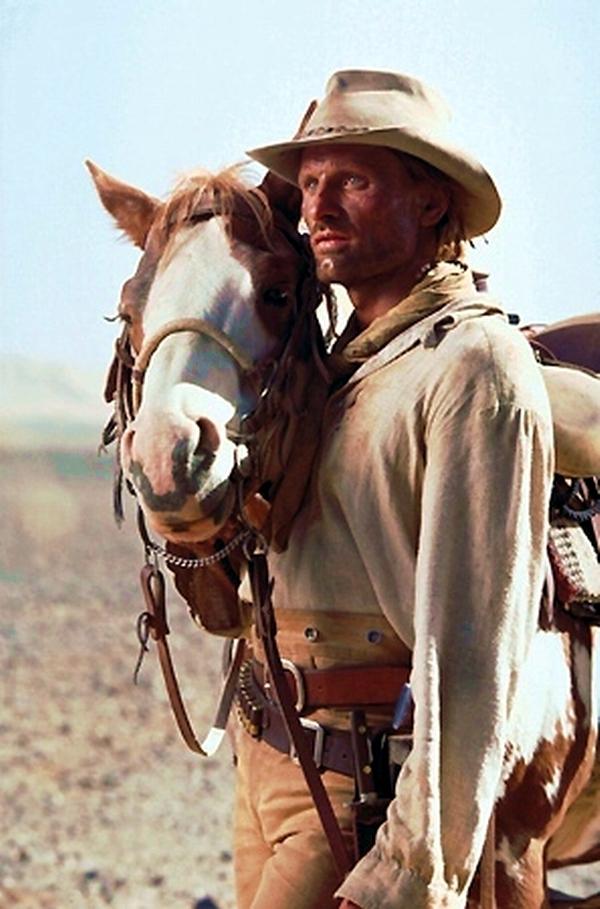
Image 1 of BA6

So, I wanted to wait until I had finished all my pre-production images as well as the final one before I posted anything. I wanted to make this one long blog post with all the images in order.

First Step
My first step was collecting many reference images to work from. This is my collection:

Environments:


Extras:


Horse and Rider:


Second Step
My next step was creating the landscape/environment that I wanted the picture to convey. As this was my first image I wanted to create something a bit simple and vast to get me into the style I want to use. I choose a desert landscape based on my theme. I then created some choices as to the layout of the image.

Image 1
Sand Dunes in Midday
This empty landscape would basically set the scene, and give a sense of isolation and loneliness.


Image 2
Camp on the Dunes at Sunset
I wanted to experiment a bit with the lighting, as sunset in a desert can create some beautiful colours. This is my idea of the player camp site.
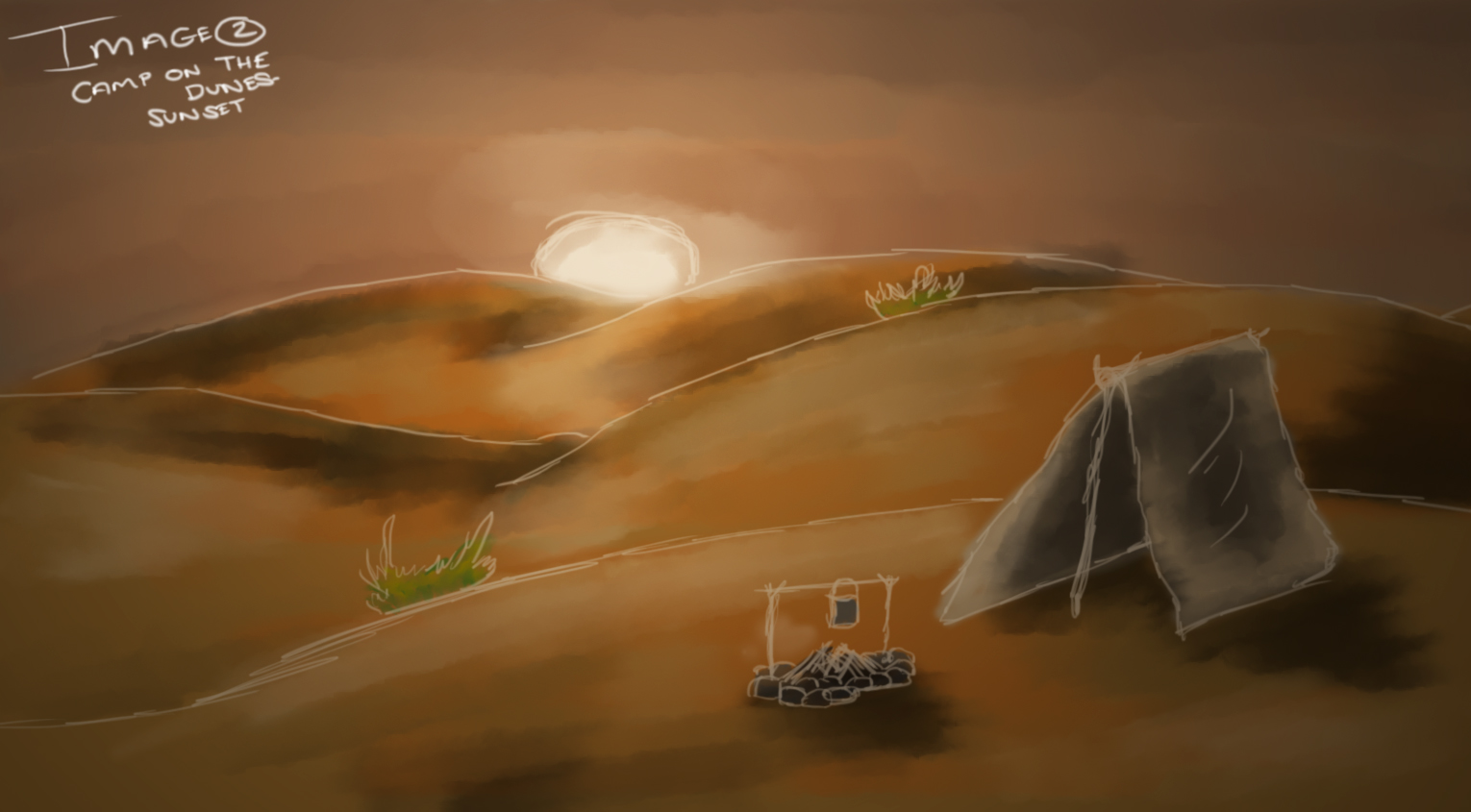

Image 3
High Dunes at Sunset
This is one of my favourites as the different heights of the dunes gives a lot of depth to the image, and with the sun setting over them, it can create dark shadows giving a sense of urgency from the night.


Image 4

Steep Dune at Midday
This idea was to also experiment with silhouettes and lighting, with the steep dune giving struggle to the image and conveying hardship for the character.


Step 2
I then began on some pre-production images, such as characters on the image and other, smaller objects. My first step was putting together some silhouettes of the horse and rider,so I could choose as to which would look best.

Horse and Rider Silhouettes
These are of the rider on horseback in different gaits, walk, trot, canter and gallop and from different angles.


 Horse and Rider (Separate) Silhouettes
These are silhouettes of the horse and rider both on the ground in different poses, standing together, sitting as well as walking together.


Desert Plants and Camping Equipment
I conducted some research into desert plants as well as western camping equipment, and put together some sketches of possible plants and equipment I could use in my image.


Rider Equipment
I then realised that the riders equipment must have to be looked into, so some research into 'Red Dead Redemptions' John Marston was conducted.


Step 3
Then, using my landscape images and my silhouettes I put together some mock up images for positioning.


Step 4
After deciding which one to pursue, I began finding more reference images and making an initial sketch.

My Chosen Image
I chose this one as I felt I could get a sense of urgency in the character, showing a danger on night time in the desert. I wanted to create an image with strong lighting and shadows and this positioning was perfect.


My Initial Sketch
This is my initial outline for my image, this was created by combining reference images as well as my previous mock up. As you can see it has been more refined and expanded from the initial mock up.


Step 5
Then began the task of colouring the image.

Stages of Colouring and Technique
From the initial sketch, I made a new layer for the background and began painting it in block colours. Using a palette of different shades found in my reference images, I mixed in different shades on both the sand and sky and smudged using a special brush.

Sky:


Sand:


 From this stage I began on the horse and rider, block colouring them to get the base colour. Tone and shadows would be added later on.

Horse Block Coloured:


Both Horse and Rider Block Coloured:


 Then I used separate layers to create tone and shadows. Using black I created depth to the horses muscles to give movement to the image. From this, I used white on another layer to give shine to the horses coat. And then on the final layer, I added lots more detail to the horse overall, and added shadow according to the light source. However,without the white lines, the horses colouring looked a mess, so I pulled the opacity down on the lines and neatened it up.

Using Black for Tone:


Using White for Shine:


Adding More Detail:


Without the Lines:


I then used the same technique for the rider, block colouring in the main colours then I used black and white to create shadows and shine. There was quite a bit more block colours to put into the rider as there is a lot more detail on his clothes. 

Block Colour:


Rider with Shadows and tone:


I then needed to put tones into the sand and sky, as well as detail and shadows. Using darker colours from my palette, I created the shadows and tone given on the sand to give depth and a sense of lighting. Also, using a special brush I created a splashing sand effect from the horses back legs to give movement to the image. After this, I added some more tones and colour to the sky, giving more colour and life to the picture.

Tone and Shadows on Sand:


Tone and Colour on Sky:


Finally the image needed lighting. I experimented with a few lens flares, but decided on one. I first tried without any lighting effects on it to see what this looked like. After deciding it was too light for what I wanted to come across, I tried some lighting effects out on the image, as well as different colour tones etc. 

No lighting effects, with Lens flare:


After having a discussion with my course leader and viewing the image on the screens at Uni, I can see that this image looks the best on the screens, as any darker you would lose detail. Also, after getting my learning agreement back my tutor does not want me to focus on Red Dead Redemption, and make it my own. Therefore, I am going to conduct some research and come back to this image to change it slightly.


Wednesday, 3 April 2013

CS Games Analysing: L.A Noire


L.A Noire

L.A Noire is a Investigation Crime Thriller game based around the life of Cole Phelps. The game was released in May 2011, for Xbox 360, PS3 and PC. Made by Rockstar, the games style follows that of their previous games such a Grand Theft Auto and Red Dead Redemption. With the same feel to the graphics and gameplay, Rockstar have their own style when it comes to games. Their games always give players an immense amount of freedom to do as they please in the world, even though there is a set narrative, and their art style is very crisp and realistic. The game is targeted at adults, 18+ as it has graphic scenes of violence and death, and many murders that the player has to investigate.


Conflict in the game is based around the life of a Detective. The character is shot at by criminals and the conflict in the game encourages the player to pursue and subdue the criminal. As the players character is in this line of work in the narrative it is natural for the player to have to deal with conflict situations. The game is for one player so the struggle in the game is purely against the AI. The game creates situations that the player has to deal with, and the AI reacts to the players decisions.


The Interaction in this game is incredibly diverse and immense. The player can interact with almost anything at a crime scene, and look around it and even zoom in on things that maybe important. The interaction also spreads to speech as the player has the option to choose whether the person they are interrogating is telling the truth or not, and can also present evidence to back it up. The player controls the character in third-person, giving them a view around the whole area. The game also isn't one set path for the player, they can also get 'calls' in their police car which they can either go to or not. These extra side missions let the player make their own path in the game, and also give them the chance to live this characters life as their own.


As this is an investigation game, without interaction this game would not thrive. When investigating a crime scene the player needs to be able to look at pieces of evidence and analyse them. The interaction in this game gives the player the opportunity to decide which pieces of evidence are important, and play the narrative out their way. This type of interaction creates unique gameplay to each player, making the experience even more immersive.

The game is very realistic, with new technology put into making the faces of each character move realistically. The graphics are vivid and crisp, with the colours slightly dulled to give an old fashioned feel to it. Each chapter in the narrative has an old 1940s title screen to it, giving more art and history to this beautiful game.


Influences:

The Movies

Sweet Smell of Success
This late-'50s noir inspired L.A. Noire with its stunning views of a city at night.
The Naked City
Any case-based police procedural, whether film, TV, or video game, owes a debt to this influential film.
Chinatown
A defining moment in film for its take on corruption and the form it took in the San Fernando Valley.
Jazz: A Film by Ken Burns
This incredible PBS documentary charts the history of jazz, from its birth in the early years of the 20th century through to modern times, and gave us a guide to the kind of musical atmosphere we wanted to create inside the game.
Out of the Past
Famous for its twists and turns, the epilogue-as-a-prologue at the start of the film is one of the great moments in cinema.
The Asphalt Jungle
A stunning heist movie in the noir style, this reminds me of an Ellroy novel where each character is fatally flawed and there is a sense of impending doom from the first scene.
The Third Man
The beautiful setting (postwar Vienna) and the powerful musical motifs were a huge inspiration, as well as the incredible lighting and staging.

Television Series

Badge 714 A radio series and TV show from actor and writer Jack Webb, the TV show (also known as Dragnet) chronicled real life on the force and re-created the image of the LAPD. I have an old copy of the novel on my desk.

Naked City The show spawned by the movie, which created the model for Law & Order and other similar shows.


The Music

Miles Davis: Kind of Blue
The best jazz record ever made, and it presages the Cool West Coast movement that is the period for our game.
Miles Davis: Sketches of Spain
Put it on, have a listen, and you'll soon be transported miles away.
Dexter Gordon: One Flight Up
A great exile recording made in Paris that I listened to a lot while writing the script.
Chet Baker: Witch Doctor (Live at the Lighthouse)
The Lighthouse was a jazz club along the seafront in Santa Monica. We used to use this track in our early presentations for the game.
Oscar Petersen: On the Town With the Oscar Peterson Trio
I listened to this a lot when writing the overall plot for the game.

The Authors

Raymond Chandler: The High Window, The Long Goodbye, and famously The Big Sleep
Subtle nods to these books can be found throughout the game.
Dashiell Hammett: The Dain Curse, Red Harvest, and The Maltese Falcon
One of the greatest writers in crime fiction.
James Ellroy: L.A. Confidential, The Big Nowhere
It's hard not to recommend that you buy everything Ellroy has ever written. Ellroy creates complex, human, deeply flawed characters that you come to love--a genius.
James Lee Burke: A Stained White Radiance
For someone who can't write prose, reading his novels is very humbling.
James M. Cain: Double Indemnity (screenplay for the film by Chandler)
Funnily enough, this and The Postman Always Ring Twice are the two defining novels of an everyman being manipulated by a beautiful woman.
Nathanael West: The Day of the Locust
It's still the definitive novel of the hope and despair of the early Hollywood process.

The Locations

The Mocambo Club
A famous LA night spot on the Sunset Strip, the Mocambo was a hangout for the rich and famous and was renowned for the nefarious events that would take place there.
Brown Derby
Another 1940s LA landmark with caricatures of Hollywood stars covering the walls.
Hall of Records
We wanted to do a Chinatown moment where a character is searching the files, so we had to re-create the original Hall of Records, which was demolished long ago.
Egyptian Theatre
I've always loved the Egyptian Theatre and Grauman's Chinese Theatre, but I had never seen a film there, so we made sure to use them as interior locations during cases in the game.
Central Police Station
Like much of the Bunker Hill side of downtown LA, it has now all but disappeared, but it was fun researching what the building was like, including the attached Central Receiving Hospital.

The game is whole with its use of 1940s type music, as well as its realistic sounds. The use of speech is similar to this time period and and the sounds of cars etc make you feel like you are in this city. The persuasive purposes of this game are to make the player think into the subtle facial expressions of people, and to doubt others truths. It makes the player really observe their surroundings to find all the evidence.

The effectiveness of this game is almost absolute. The amount of detail put into making this game incredibly interactive shines throughout, and the classic 1940s feel to the game puts you right in the midst of the action. 


 Image Links:

Tuesday, 2 April 2013

Research


Frank T. Hopkins Memoirs
(The Ocean of Fire)

Frank Hopkins (1865-1951) was an American horseman made famous by his endurance racing career. He was said to have won over 400 long-distance races in his time, which includes the 3000 mile long race across the Arabian Desert in 1890. This race was completed on his most famous horse, Hidalgo, a Mustang Stallion. The race that interested me the most from Franks life was the great Ocean of Fire race, based in Saudia Arabia. This 3000 mile long race challenged riders to their limits and the scorching heat and sandstorms challenged riders in ways completely different to the challenges of endurance racing in America.

“Slightly over l00 horses started the ride from Aden in 1890. The great caravan of skilled riders had picked their best horses for the ride. Even in the mass of horses Frank's parti-coloured stallion stood out among the solid coloured Arabian horses.

The ride progressed along the Gulf of Syria, then inland along the borders of the two countries. Much of the ride, according to one of Frank's letters, and a letter to the author some years ago from Mrs. Hopkins, was over limestone country. The only feed available was called vatches, a plant that proved to be very nourishing. Camels accompanied the horsemen and carried barley for the horses. Water was scarce at times, and occasionally horses were without a drink for two days. Sandstorms hampered the riders, and when they were too intense, the ride was halted.”

“By the second week of the ride Frank made his move to surge ahead. As always, he started slowly to accustom his horse to the road. By now the hard ride, the elements, and small amounts of feed had eliminated the less able horses. Day by day the string of riders dwindled as the leaders kept well ahead. Each day Frank urged Hidalgo to a faster pace and finally took the lead. The camel train was now spread all over the route in order to supply provisions for the horses.

On the 68th day, Frank and Hidalgo reached the finish stone of the 3,000-mile ride. Hidalgo had lost considerable weight, but Frank had Hidalgo rested and well fed when the second rider reached the finish stone 33 hours later. Only three other horses technically finished the race. 
The Arabian horsemen praised Hidalgo for this wonderful performance.”

As well as studying Franks memoirs, I also had a look at the film Hidalgo, based solely off these memoirs. It features his journey across to Saudi Arabia and his race throughout this land.

Here is a collection of reference images:


Monday, 1 April 2013

CS Games Analysing: Spore


Spore

Spore is a Sim-type creationism game, created to give players an experience of creating a creature from a cell stage and helping it evolve. It was created by EA, and released in 2008 for PC, MAC, Nintendo DS and Mobile. EA is well known for its unusual games which give the player a chance to control another beings life, for example The Sims. EA also have strong colours and environments in their games, and Spore is no exception. Spore is a game aimed at ages 12 and up, due to its theories and conflict, and also its creationism. Teenagers will be drawn to this game more than adults due to the popularity of Sim games and creative games with this age group.


The conflict in this game is very natural as it is merely a conflict for survival. The conflicts found in this game are means to kill and eat other animals, or to create territory. It is conflict found in everyday nature and give the game a sense of realism and survival of the fittest. The struggle in the game is only your own, as other players are not in the same world as you. The game creates creatures in the players world that will lead to conflict, leading the player to battle against them.


There is a significant amount of interaction in this game, the main part would be the customisation of the creatures. There is a substantial amount of customisation options for the player to choose from, making the creature that each player makes being unique. The player can also control their creatures, making their survival decisions for them, instead of clicking options for the characters. This makes the player feel more involved in how this story is being played out, rather than watching as it happens. In Spore, if the player was not interactive with the game, this would be quite boring. The player would merely watch as the cell grew into a creature and built civilisations etc. There would be no feeling of a struggle for survival, and the player would not feel like they are the creature.


The game itself is very colourful and unique. The graphics are quite cartoon-like and this gives a comedic feel to the game. The worlds portrayed contain unusual life and plants, conveying that it is not like our own world. The colours also help give this idea. Spore is a very beautiful game, with its environments adding life to the players worlds. Visual influences could possibly be The Sims, as well as Star Control. Other influences on the gameplay could be Darwins theory of evolution, which could also be an intertextual reference.

Spore’s fifth phase borrows heavily from games like Star Control 2 — which is still better in various aspects like diplomacy, fitting out your spaceship and a good mix of story line and free exploration. We suggest you look out for the still maintained open source version, ‘The Ur-Quan Masters’.”

Starting as a cell, we watched as a meteor crashed into our randomly generated land and we emerged. We were cute, a little blue with a beak and some little tentacles. The perspective is top down and, in our mind, we reminisced about Star Control before moving on.”


Spore has a persuasive purpose to make the player be creative. It gives the player the opportunity to be imaginative with their creatures to create something unique and full of life. The games look and sound give the player the feel of being this creature, and this makes the player think like an animal in terms of survival and what they must do to survive.

In my opinion, I feel they have tried to put too much into one game. The player can develop their creature to create civilisations, but then there is a space era etc, and it all gets quite confusing. The player should just be able to develop their creature into civilisation stage, and then maybe the civilisation increases in complexity over time. 


Image Links