Tuesday, 16 April 2013

Animal Cruelty in Games, CS Research

Animal Cruelty in Games

Animal Cruelty has always been a sensitive issue in society, with television shows and movies being under strict control by organisations such as the PETA and the RSPCA when shooting films with animals in. There has always been an accusation that one of the causes of animal cruelty is that if it is shown on television or film, that viewers will mimic the actions, thinking they are acceptable. This has been disproved however, as there are more dominating facts for people committing cruelty to animals.

You wouldn’t however, expect video games to be targeted by animal cruelty organisations as promoting cruelty to animals. As video games are not even real, this would be expected to be a part of media where creators can be free to express themselves freely without the constraints of real-life problems such as this one. This isn’t the case as organisation PETA has actively been targeting video games for many years for promoting cruelty to animals in ways such as using their fur, cooking them as well as hunting them and using them to fight. But this topic is an unusual one, as even though there have been lawsuits and protests, games are fictional and computer generated. Just because a player kills a rat in game, this doesn’t mean they will go out into the real world and kill rats.

Research Links

Pokémon

Pokémon was targeted by the PETA as being cruel to Pokémon. They claimed it reinforced using animals as entertainment to fight each other. They even created a game themselves in which players play as the Pokémon and fight against their owners.


World of Warcraft

World of Warcraft was targeted by the PETA as reinforcing seal clubbing, as players can club seals in game. They protested for players to ‘save’ the seals in the game world.


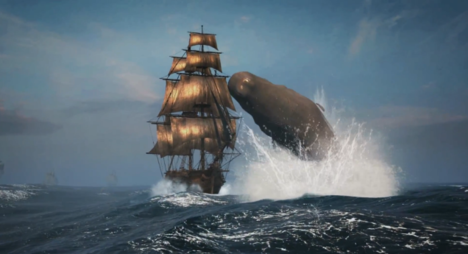
Assassins Creed IV

The most recent protest by the PETA has been against the new Assassins Creed game, the 4th instalment in the series. The reason for this has been their inclusion of whale hunting in the game, an activity which was prevalent at the time the game has been based. They claim it glorifies whale hunting, showing that it is ‘ok’ to participate in.


Call of Duty

A Student protested that Call of Duty was promoting cruelty to dogs, as the player has to kill dogs in the game. The PETA immediately agreed and followed this protest, also claiming that Call of Duty is wrong to glorify the killing of dogs.


Super Mario

The new Super Mario 3D Land for the DS has also sparked PETAs attention as in the game Mario wears a Tanooki suit, which gives him special abilities. PETA claim that this shows to players that wearing fur is acceptable, and that the Tanooki is regularly hunted for its fur.


Super Meat Boy

Super Meat Boy was targeted by PETA simply because of its inclusion of meat in its game. PETA made its own version of the game shortly after which was named, Super Tofu Boy.


Battlefield 3

Battlefield 3 had a lawsuit on its hands due to its inclusion of rat killing in its games content. In one part of the game, the player must stab a rat and then throw it away. PETA sued EA for encouraging rat killing in their game.


Cooking Mama

Around Thanksgiving, Cooking Mama was targeted by PETA due to its inclusion of cooking a Turkey Dinner. They claimed that it unrealistically portrayed the process of cooking a Turkey, and that it encouraged people to eat meat. Their version of the Cooking Mama game, shows the disgusting truth of cooking a Turkey, and gives a Tofu option of the Thanksgiving meal.


Starcraft II

The PETA protested that players treat the small alien race found in this game as equals, and to not kill them.


Anti-Video game protests

There have been many protests over video games and their portrayals of animals, and some people feel that animal cruelty should not be included in games. Others feel that games do not encourage cruelty to animals in real life, and that the PETA have blown it all out of proportion.


Sunday, 14 April 2013

Image 2 Progress

I wanted to try a new(ish) style with this one, so I have been looking at images from 'Journey' and piecing a new image together which is simple yet still beautiful.


These are the two images which I focused on for this image, as I wanted to continue with my desert landscapes. I particularly like the use of clouds in these images also, which I would like to experiment with.

Here are some reference images which I put together:


Here is my first mock up of the Environment:


This is a quick half an hour mock-up of the layout of the image. I wanted the character to be up high, as to give scale to the landscape, and also portray isolation.

Silhouettes of the Character:


It was a choice between standing still and rearing as I wanted the character stationary as to give a focal point on the image. 

Horse Colour Tests:


With the colour of the horse, I will experiment with this when the background of the image is complete, as I want the horse to stand out in the image.

Mock Ups with Character:


After looking at these two, I decided to have the horse and rider standing still as to not draw the focus away from the environment too much. It will also reinforce the look of tiredness and weariness in this environment.

This is the initial sketch for the final image:
I also compiled some swatches for the colours in the top corner.


While sketching the image, I decided to make the character quite small as to give scale to the mountain behind, and I also wanted to focus on the environment over the character.

Friday, 12 April 2013

Journey


Journey
Research


Journey is an unusual online adventure game created by ThatGameCompany in 2012. It features a small character in a red cloak making a journey across a large expanse of land towards a mountain. Made by the same creators as Flow and Flower, this game has the same beautiful art style with unique and immersive gameplay. Journey pushes the boundaries of gameplay, with its developers wanting to create something new.

And we wanted to be a company to extend the depth and the width of the emotional spectrum that games can communicate.”


The use of the online feature in this game is completely unique, as players encounter each other randomly and can only communicate through noises. They can also help each other out, but it forces players to communicate in a unique way than the usual.

And so our focus for Journey was to make the player feel small and to feel wonder, so when they run into each other in an online environment, rather than thinking about how am I supposed to use my gun on the other player, we wanted them to feel a connection to another player.”


Journeys environment and characters creates the narrative in this game, and although it is not crystal clear it is apparent. The player feels empathy for this small character in this massive world, and they want to help it complete its journey.

Journey is more like a story broken apart. There are two stories: There’s the ancient civilization’s story and the story of the player’s own journey. The civilization’s story is more broken apart and spread throughout the world for the player to discover. But what is more important is the arc of the player’s journey itself, which is based upon the Hero’s Journey, part of the monomyth.”


The main reason why I chose to study Journey is because of its unique art style and its beautiful environments. The use of colour in this game and its artwork is bright and vibrant, and the use of different colours in the game to show mood is powerful in creating a mood.

Journey started relatively peaceful and calm. So when we choose the color we like to keep it low contrast, overcast lighting and everything is very yellow. When it gets slightly exciting in the first act, when the players are surfing through the sand, we want the sand to be more contrasting, using the color to make it feel exciting. Then when the player is lost in the underground, we want the color to feel cold, cyan and blue and green, to give you this lost and underwater feeling. And during the mountain level we wanted the player to feel lifeless, their energy and use is gone, so the white color works great there. And then in the end, the climax, we wanted a color that brings a sense of freedom, a sense of liberation, and so the blue sky and the mountain streams are the right fit.”


What drew me to this games art style are the brightness of the colours and the simplicity of it as well. They are mainly bold, block colours used in a certain way to create a beautiful environment. I want to try and use Journey as an influence in the development of my own art style as I want to have a unique and vivid look to all of my images like Journey.