How has the enhancement of technology increased the strength and depth of narratives in games and altered the way in which we interact and respond to them?
Throughout the years, games have become substantially more advanced in their technology, with the way they are created being pushed to the next level with every new release. From the earliest games played on the EDSAC Computer in 1952 to games we play today on Xbox 360's , PS3's, Gaming Computers, Handheld consoles etc. there is a extremely prevalent correlation to how the enhancement of technology has changed the way we play games. In particular, there is a strong correlation in the way narratives are formed and used in a gameplay situation. Narratives have always been apart of games, however looking at a timeline of games a definite link to the creation of a story and the technology used to develop the game.
Looking at the earliest examples of games, there is one thing that is clear. Games haven’t always had narratives, as the technology was not developed enough to support a story. Although, as the technology was developed further, narratives began to emerge. Sometimes they weren't always crystal clear and the gameplay wasn't solely driven by them, but they were present in some way. Looking briefly at the history of games, this is noticeable. Looking way back at the first computer games, 'OXO' (1952) was written for the EDSAC Computer and featured a digital version of the famous noughts and crosses game. This was the first digital game to be run on a computer, and can be said to be the first ever computer game. Another of the earliest games, 'Tennis for Two' (1958) was also one of the earliest digital games. It was created to run on a Donner Model 30 Analog computer which uses an oscilloscope to simulate a game of tennis. These two games, because of the lack of technology and the fact that this was a completely new and unique idea, have no narrative present. They are merely competitive games that players can play against one another to gain a score. The earliest example of a narrative present in a game is in 'Spacewar!' (1961) for the DEC PDP-1 computer. Even when hearing the name of this game, you already think of a story in your head. The game is played with two players, each controlling a spaceship with the intent to destroy the other players ship. This is while avoiding a star in the centre which pulls in the players. Even though the narrative is not given to the player , it is prevalent as it is one which the player themselves creates. Another example of this is 'Computer Space' (1971) which was the first ever arcade game. It featured a 13” GE Television which was encased in a fibreglass cabinet, with a paint can to catch the quarters fed into the machine. It was heavily influenced by 'Spacewar!', as the player plays as a spaceship fighting flying saucers. With the same conclusion, 'Computer Space' has no set narrative which is spoon fed to the player, but there is still a story that the player creates themselves.
A bit further down the line with the release of more advanced computers as well as systems such as Laserdisc players, more advanced games came on the market. These games showed an extreme leap in the advancement of narratives in games. Text-based games were the first to implement strong interactive narratives into gameplay. Instead of the game being driven by the gameplay, in text based games the gameplay is driven by the narrative. Early examples of popular text-based games include 'Star Trek' (1971), 'Zork' (1977) and 'The Hitchhikers guide to the Galaxy' (1984). An innovative twist on text-based games was created by ex-Disney animator Don Bluth. 'Dragons Lair' (1983) was created on Laserdisc and for arcades. It features similar gameplay to text-based games, where the player follows a story by clicking options, however it is much more immersive. This is because the game runs with animated cutscenes where the player chooses where the character goes in the castle. It is basically a animated movie, where the characters choices are made by the player. In the same year as 'Dragons Lair' was released, so was the first technological leap in gaming. The 'Nintendo Entertainment system' or 'NES' was released in 1983 in Japan and in 1986 in the US. The NES was the first gaming console to sell well, as it was marketed towards families. It set the bar technologically for all games consoles to come. The first major game to be released on the NES was the famous 'Super Mario Brothers' in 1985. This is a prime example of where narratives in games began to grow into something more. This tale of a Mexican Plumber named Mario and his Brother Luigi and their quest to rescue Princess Peach is one that is still strong today, and is also one of the most famous game narratives ever. The enhancement of technology with the NES allowed this side scrolling game to be created with its narrative as strong a part of the experience as the gameplay. Before 'Super Mario Brothers' games were either gameplay orientated or narrative orientated as the technology was not enhanced enough for both. 'Super Mario Brothers' set the narrative bar for future games, and from this more similar games followed.
The first true adventure game released on the market was ‘The Legend of Zelda’(1985+). This 8-bit adventure classic was released on the NES and followed the story of Link and his quest across the land of Hyrule to save the princess Zelda. Following the same classic fairy-tale story arch as ‘Super Mario Brothers’, the twist that was given to this classic tale created unique and beautiful characters. The technology put into this game was very similar to that of previous games, however its open style roaming gives the player the opportunity to become Link, rather than clicking options. This makes the game that much more immersive, and this started the era of interactive storytelling, with the player able to make choices for the character and seeing the story unfold before them. This classic game still continues to this day, with each new release pushing the boundaries onto the next available console, with the graphics and narrative slowly evolving over time. The next game which evolved narratives in games to a substantial level is the ‘Final Fantasy’ series. Also released on the NES, the first installment of the game was released in 1987 and the series is continuing to this day, now being on its 14th game. The story of the series focuses around an intricate weave of many different characters tales, each in a different era of the planets life. The most popular of the series is ‘Final Fantasy VII’ focusing on the industrial revolution type stage of this world. The beginning of the series began simple, with small sprites as the characters which resembles the style of ‘The Legend of Zelda’. It is also similar to ‘The Legend of Zelda’ as this game was also an open adventure game, with the player controlling a character around a fantasy world. However, this series also pushed the technology of game development by implementing a new type of gameplay. As the first of their kind, the turn-based fighting sequences in the final fantasy were completely unique and still remain ‘Final Fantasys’ trademark. The success of this innovative idea, with the mixture of adventure, action and strong narrative, continues to grow in popularity and the development of the turn-based fight sequences continues to evolve throughout the consoles.
In 1989, the Gameboy was released. This was the first handheld console to push the technological boundaries, and this succeeded by selling 118.69million of the console since its release. Moving into the 1990’s, this decade was one that revolutionized gaming as we know it. This decade came with the release of the Playstation. It was also the time where narratives in games was pushed to its limits because of the advance in technology. The main example of narratives in games being transformed in this decade is the famous ‘Pokemon’ game released for the Gameboy in 1996. This series is one of the most well-known franchises of games ever to be made. The games followed the story of an unknown character in which the player can name, and their journey to become the Pokemon master. This was one of the first games to be shaped entirely by the players decisions. Every player would capture different Pokemon and have them at different levels, and choose to go one way instead of another etc. This made the game extremely unique and gave a whole new way of looking at how games could be played. It also had an option for the player to trade their Pokemon with their friends due to the capability of linking two Gameboys together. Utilising the Gameboys technology, Pokemon became a playground favourite with Children trading their Pokemon with each other to gain what they want for their game. The repeatability of the Pokemon games is very strong, as you can have a new adventure every time, which means they have never stopped being popular. This fantastical world enchanted people everywhere, and this series of games is a example of the beginning of transmedia storytelling. The different medias that Pokemon spread to because of its characters and world, gave background to the experience and sucked in fans everywhere. Trading cards, TV shows, Movies, spin-off games, Merchandise etc spread globally, and the popularity of this narrative has ensured that its games still sell today, and the TV show continues to be watched and the cards collected. This proves how narratives in games can make it successful or not. The evolution of technology has meant that the Pokemon series has evolved into something completely immersive with the graphics getting better and better with each new game. Looking at the Playstation, games with incredibly in-depth stories were being released on this Platform from its debut. The PS1 brought about games such as ‘Crash Bandicoot’, ‘Spyro’ and also ‘Resident Evil’. Due to its hardware the PS1 enabled game developers to explore the capibility of 3D graphics. This created a whole new way of creating games, and the new generation of 3D games was born. The beauty of the 3D graphics made these games successful with the beautiful colours and characters coming to life on the screen. The PS1 was incredibly popular, selling 102.49million consoles since its release. Because of its popularity, Sony pushed the limits of its technology and the Playstation 2 was created and released in 2000. The Playstation 2 revolutionized games, with games such as ‘Jak and Daxter’ and ‘Kingdom Hearts’. This type of game, with rich storyline and 3D graphics is incredibly realistic and its vivid characters allows players to gain attachments to characters and gain the full narrative experience. The PS2 is Sonys best selling console to date, selling 156million units to date.
Shortly after Sonys release of the PS2, Microsoft released their competitor, the Xbox. The Xbox was released in 2001, and this console also pushed the boundaries of the technology, creating more and more successful game series. The Xbox’s most popular series of game is the ‘Halo’ series. Seeing the success of their console, Microsoft released their new console in 2005. The Xbox 360 featured rich, realistic graphics which enabled games to be deep and complex. The Xbox 360 brought about games series such as ‘Mass Effect’ which is the perfect example of a next generation interactive story. Any decision you make in the game effects how your narrative plays out and makes this experience unique to the player. The realistic graphics enable characters to come to life on your screen, and more realism means players are more like to have empathy for them. Sony soon after released the Playstation 3 as the Xbox 360’s competition, with even more advanced graphics and hardware. A key example of how this shaped narratives is in the PS3 exclusive game ‘Heavy Rain’. This game featured a unique type of gameplay, with the player having to do everything for the character. However, where this game really stands out is with its narrative. Its realistic and in-depth detective narrative plays out similar to a film. With its realistic graphics and beautiful cinematics, it is difficult for a player not to feel completely immersed in the story.
With the arrival of new technology, you will not find a game today that does not have a narrative of some kind.Whether it is as simple as getting a football team into the premier league or as complex as solving a mystery, the evolution of technology over the years has enabled games to become something much more than just a game. They are Art, they are detailed stories with unique characters, and they are a completely new form of storytelling. A form that lets the player decide the outcome of the characters adventure rather than having everything already set in stone. This technological leap made in the games development industry has enabled games to be an escapism, for players to become a fantastical person in a strange world. With the technology becoming more and more advanced throughout the years, there are endless possibilities as to what narratives in games could evolve into in the future.
Around 2200 words.
Showing posts with label CS Essay. Show all posts
Showing posts with label CS Essay. Show all posts
Sunday, 3 February 2013

Friday, 25 January 2013


Thursday, 24 January 2013
CS Essay Focus - Narratives in Games
My focus for this Contextual Studies 2,000 word report is to be looking at narratives in games and how this has changed games and how they are developed over the years. There is no doubt that the use of narratives in games has had a substantial impact on how we play and interact with games, but looking back through the years we can see where it all began, and its development. I will be looking in depth at the background of game narratives right from where it all began with the smallest and most simplest of games. Then looking up the timeline you can see a slow increase in the inclusion of a narrative, with the first major one in 1983 with text based adventures following a plot line. The use of narrative then became more prevalent with the increase in technology, with games such as 'Suer Mario Brothers' and 'The legend of Zelda' being released. These games, although being driven by the gameplay have extremely strong narrative structures, even though very simple. They both follow the 'save the princess' story arch.
I then want to look at games such as 'Final Fantasy' and 'Pokemon' as early examples of both narrative driven games, and Transmedia storytelling. Also, I will look at other examples such as 'Resident Evil'. This is also where I want to explore the films industry and games. Games narratives have become so advanced and immersive that they have been transformed into films. 'Resident Evil' is a brilliant example of this.
To finish off the report I wanted to address the recent advances in storytelling in games, mainly the impact of interactive storytelling. This type of narrative is in almost all of today's games in some way. This type of storytelling gives the player the opportunity to create their own path, and have a different outcome every time. This makes the story unique to the player and makes it feel much more realistic. Examples I am particularly interested in looking into are 'Heavy Rain', 'Mass Effect' and 'Fallout'.
It is safe to say that the inclusion of narratives in games has been a successful step in the development of games. Without stories in our games they aren't nearly as immersive or realistic. Nowadays, a games narrative can have a major impact on how it sells, and gamers even buy a game just for its story, just like a film or a book. In my report I hope to get across the importance of narratives in games.
I then want to look at games such as 'Final Fantasy' and 'Pokemon' as early examples of both narrative driven games, and Transmedia storytelling. Also, I will look at other examples such as 'Resident Evil'. This is also where I want to explore the films industry and games. Games narratives have become so advanced and immersive that they have been transformed into films. 'Resident Evil' is a brilliant example of this.
To finish off the report I wanted to address the recent advances in storytelling in games, mainly the impact of interactive storytelling. This type of narrative is in almost all of today's games in some way. This type of storytelling gives the player the opportunity to create their own path, and have a different outcome every time. This makes the story unique to the player and makes it feel much more realistic. Examples I am particularly interested in looking into are 'Heavy Rain', 'Mass Effect' and 'Fallout'.
It is safe to say that the inclusion of narratives in games has been a successful step in the development of games. Without stories in our games they aren't nearly as immersive or realistic. Nowadays, a games narrative can have a major impact on how it sells, and gamers even buy a game just for its story, just like a film or a book. In my report I hope to get across the importance of narratives in games.
More CS Research
'Resident
Evil'
Also
in 1996, the series 'Resident Evil' began with its first game for the
Playstation. Made by Capcom it follows the story of Chris Redfield
and Jill Valentine in the midst of a zombie outbreak in Raccoon city.
The story was immediately popular and so Capcom continued the story
through to the next game, and so on until today where the series is
on its sixth main instalment. Here is a time line of the games from
the beginning.

Resident Evil, Resident Evil 2 and Resident Evil 4
have been placed on lists of the best video games ever made.

Novels
and Comics
Also
sprung from the original game release, novels and comics were
released alongside the game in 1996. S.D. Perry has written 6 titles
each following the main narrative but addressing different peoples
stories and giving background to the main narrative in the game.

A comic
was released in 1997 by Marvel comics, which was a single issue which
was sold alongside the game. However another series of comics was
released by Wildstorm in 1998 which was a monthly comic. This only
lasted for 5 issues.

Films
There have
been 5 live-action films following the game series, all produced and
written by Paul W.S. Anderson. Instead of following the games
narrative solely, they follow the story of another character named
Alice. However, main characters from the game series are featured
such as Jill Valentine, Claire Redfield etc. Making over $600 million
worldwide, the films have been a major success, and even holds the
world record for the 'most live-action film adaptations of a video
game'. It is also described as the most successful movie series which
is based on a video game. The films are as follows:
- Resident Evil (2002)
- Resident Evil: Apocolypse (2004)
- Resident Evil: Extinction (2007)
- Resident Evil: Afterlife (2010)
- Resident Evil: Retribution (2012)
- Resident Evil 6 (TBA)


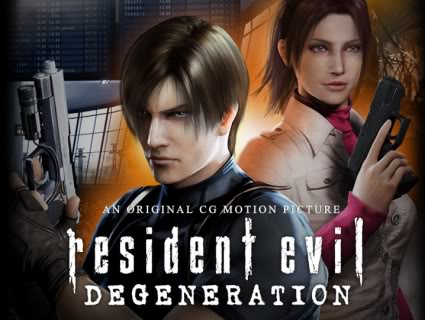
There have
also been CGI movies based on the games narrative:
- Resident Evil: Degeneration (2008)
- Resident Evil: Damnation (2012)

Merchandise
There has
also been a widespread amount of merchandise for the series, and its
popularity is now so massive there are even large cosplay groups
dedicated to the series. There is even a Resident Evil themed
restaurant open in Tokyo.


Saturday, 12 January 2013
CS Idea; The Influence of Narrative in Video Games
For Contextual studies I had a few ideas I wanted to look into, the one I was going to pursue was researching Steam. However, quite a few people seem to be doing this so I decided to think a bit differently. Therefore I came up with this idea. I want to look at the origin of narrative in video games and the effect that this has had on games now. I feel that narrative has evolved how we look at games, and through research I will discover where narratives in games started and its evolution through time.
Games have always had narratives, maybe they aren't crystal clear and the game play isn't driven by them, but they are present in some way. Looking at the timeline of the history of games, this is prevalent. Looking way back into the past at the first computer games, electronic 'Noughts and Crosses' (1952), and 'Tennis for two'(1958), these are examples of non-narrative based games. They are played purely to compete with another player and win. However the games following these, 'Spacewar' (1961) and 'Computer Space' (1971) do have narratives. 'Spacewar' is about a war in space, and although the game play is simple and not driven by the narrative, there is still the background story prevalent.


Looking a bit further down the line in 1975 at the first computer game 'Gunfight', was based around 2 cowboys having a stand-off and this was for 2 players to fight each other. It has a very thin narrative, but it is still there. in 1976 'Death Race' was released which also had a very thin narrative, where the player had to run over 'gremlins' in a car.


In 1978, 'Space Invaders' was released into arcades. Another game driven mainly by its game play, but it still has a narrative. The player is stopping aliens from invading Earth.

From then on, games such as 'The Portopia Serial Murder Case' (1983) and 'Dragon's Lair' (1983) sparked a new type of game. One driven by its narrative, more like a movie. Both of these games featured little actual game play, but focused more on telling the story. Then in 1985, 'Super Mario Brothers' was released which was one of the first very popular game which also had a strong narrative. Its characters and their stories make this narrative very strong, while still having unique and addictive game play.


'The Legend of Zelda' (1986) was also one of the first games to introduce a strong narrative to games.Still going strong today, it tells the story of Link his quest to rescue the princess Zelda.


Plot Summary
"A long, long time ago the World was in an age of Chaos.

The 'Final Fantasy' Series (1987+) along with 'The Legend of Zelda' also revolutionized narratives in games. It was one of the first series to introduce a new characters story in each of its games, but continuing in the same world. It also introduced a new type of game play, with a 'turn based' fight sequence.


Plot Summary
'In Final Fantasy, the villain Garland creates a time loop. Garland makes a pact to live forever by having the Fiends of Chaos summon him 2000 years in the past when he is defeated by the Light Warriors. There, Garland sends the Fiends of Chaos to the present, continuing the loop. When the Light Warriors travel back in time, they kill the Fiends and confront Garland, who transforms into Chaos and is defeated. This act ultimately breaks the time loop.
http://www.lingualgamers.com/thesis/story_video_games.html
http://www.xtimeline.com/timeline/The-History-of-Video-Games
'Pokemon'
 Looking down the line further at 1996, one of the first games to introduce transmedia storytelling was the 'Pokemon' series. The first games to be released in Japan were Red and Blue versions of the game closely followed by the Yellow version. Closely following in 1997, the trading card game was released, allowing people to collect Pokemon on cards and battle others using the game. The popularity of these cards was astonishing, with people still collecting them to this day.


Also following the games success and the success that the narrative had, the Anime shortly followed. First aired in 1997, the Pokemon Anime followed the story of Ash and his Pikachu and his adventures of becoming a Pokemon master. The story arch was mirrored of that in the games. The anime still continues to this day across the globe, still extremely popular. In 1998, the first movie was also released, expanding on the story from the Anime. There are currently 16 Pokemon movies, each being released following its current generation. It is currently on Black and White generation, with 3 movies already released following the story arch, and one still in the making.

The games which followed the series became more advanced in technology, and each game released gave the player a whole new experience.
Generation I
Game Boy
Pokemon: Red Version
Pokemon: Blue Version
Pokemon: Yellow Version- Special Pikachu Edition
Pokemon: Green Version (Only released in Japan)
Generation II
Game Boy Color
Pokemon: Gold version
Pokemon: Silver Version
Pokemon: Crystal Version
Generation III
Game Boy Advance
Pokemon: Sapphire Version
Pokemon: Ruby Version
Pokemon: Emerald Version
Pokemon: FireRed Version
Pokemon: LeafGreen Version
Generation IV
Nintendo DS
Pokemon: Pearl Version
Pokemon: Diamond Version
Pokemon: Platinum Version
Pokemon: HeartGold Version
Pokemon: SoulSilver Version
Generation V
Nintento 3DS
Pokemon: Black Version
Pokemon:White Version
Pokemon: Black Version 2
Pokemon: White Version 2
(http://www.listal.com/list/evolution-pokemon-games)
Pokemon has released a new generation following each new handheld released by Nintendo. The technology has gotten increasingly better throughout the games, and the popularity of the games is still strong. People still cosplay as characters, watch the movies and Anime, collect cards and of course still play the games. The amount of merchandise also created is exponential.


Games have always had narratives, maybe they aren't crystal clear and the game play isn't driven by them, but they are present in some way. Looking at the timeline of the history of games, this is prevalent. Looking way back into the past at the first computer games, electronic 'Noughts and Crosses' (1952), and 'Tennis for two'(1958), these are examples of non-narrative based games. They are played purely to compete with another player and win. However the games following these, 'Spacewar' (1961) and 'Computer Space' (1971) do have narratives. 'Spacewar' is about a war in space, and although the game play is simple and not driven by the narrative, there is still the background story prevalent.


Looking a bit further down the line in 1975 at the first computer game 'Gunfight', was based around 2 cowboys having a stand-off and this was for 2 players to fight each other. It has a very thin narrative, but it is still there. in 1976 'Death Race' was released which also had a very thin narrative, where the player had to run over 'gremlins' in a car.


In 1978, 'Space Invaders' was released into arcades. Another game driven mainly by its game play, but it still has a narrative. The player is stopping aliens from invading Earth.

From then on, games such as 'The Portopia Serial Murder Case' (1983) and 'Dragon's Lair' (1983) sparked a new type of game. One driven by its narrative, more like a movie. Both of these games featured little actual game play, but focused more on telling the story. Then in 1985, 'Super Mario Brothers' was released which was one of the first very popular game which also had a strong narrative. Its characters and their stories make this narrative very strong, while still having unique and addictive game play.


"A long, long time ago the World was in an age of Chaos.
"In the midst of this chaos, in a little kingdom in the land of Hyrule, a legend was being handed down from generation to generation, the legend of the 'Triforce'; golden triangles possessing mystical powers. One day, an evil army attacked this peaceful little kingdom and stole the Triforce of Power. This army was led by Ganon, the powerful Prince of Darkness who sought to plunge the World into fear and darkness under his rule. Fearing his wicked rule, Zelda, the princess of this kingdom, split up the Triforce of Wisdom into eight fragments and hid them throughout the realm to save the last remaining Triforce from the clutches of the evil Ganon. At the same time, she commanded her most trustworthy nursemaid, Impa, to secretly escape into the land and go find a man with enough courage to destroy the evil Ganon. Upon hearing this, Ganon grew angry, imprisoned the princess, and sent out a party in search of Impa.
"Braving forests and mountains, Impa fled for her life from her pursuers. As she reached the very limit of her energy she found herself surrounded by Ganon's evil henchmen. Cornered! What could she do? ... But wait! All was not lost. A young lad appeared. He skillfully drove off Ganon's henchmen, and saved Impa from a fate worse than death.
"His name was Link. During his travels he had come across Impa and Ganon's henchmen. Impa told Link the whole story of the princess Zelda and the evil Ganon. Burning with a sense of justice, Link resolved to save Zelda, but Ganon was a powerful opponent. He held the Triforce of Power. And so, in order to fight off Ganon, Link had to bring the scattered eight fragments of the Triforce of Wisdom together to rebuild the mystical triangle. If he couldn't do this, there would be no chance Link could fight his way into Death Mountain where Ganon lived.
"Can Link really destroy Ganon and save princess Zelda?
"Only your skill can answer that question. Good luck. Use the Triforce wisely."
( http://zeldawiki.org/The_Legend_of_Zelda_(Game) )

The 'Final Fantasy' Series (1987+) along with 'The Legend of Zelda' also revolutionized narratives in games. It was one of the first series to introduce a new characters story in each of its games, but continuing in the same world. It also introduced a new type of game play, with a 'turn based' fight sequence.

Plot Summary
'In Final Fantasy, the villain Garland creates a time loop. Garland makes a pact to live forever by having the Fiends of Chaos summon him 2000 years in the past when he is defeated by the Light Warriors. There, Garland sends the Fiends of Chaos to the present, continuing the loop. When the Light Warriors travel back in time, they kill the Fiends and confront Garland, who transforms into Chaos and is defeated. This act ultimately breaks the time loop.
In Final Fantasy II, The Emperor's dark side goes to Hell when he is killed and takes it over, raising its capital,Pandaemonium, to Earth. As well, the Emperor's light side ascends to Heaven and enters Arubboth, Capital of Heaven. Firion and his allies kill the Dark Emperor, while Minwu and the spirits of other dead characters kill the Light Emperor, ensuring the Emperor is destroyed and gone for good.'
The story continues today with the series now on Final Fantasy XIII-II.


'Wing Commander' (1990) was said to be one of the first games to directly attempt to incorporate traditional storytelling into games. It was a 3D Space combat simulator, where the player plays as an unknown pilot whom they can name. It follows the narrative of a space war, and features live actors such as 'Mark Hamill', and 'Tom Wilson'.


http://www.xtimeline.com/timeline/The-History-of-Video-Games
'Pokemon'
 Looking down the line further at 1996, one of the first games to introduce transmedia storytelling was the 'Pokemon' series. The first games to be released in Japan were Red and Blue versions of the game closely followed by the Yellow version. Closely following in 1997, the trading card game was released, allowing people to collect Pokemon on cards and battle others using the game. The popularity of these cards was astonishing, with people still collecting them to this day.

Also following the games success and the success that the narrative had, the Anime shortly followed. First aired in 1997, the Pokemon Anime followed the story of Ash and his Pikachu and his adventures of becoming a Pokemon master. The story arch was mirrored of that in the games. The anime still continues to this day across the globe, still extremely popular. In 1998, the first movie was also released, expanding on the story from the Anime. There are currently 16 Pokemon movies, each being released following its current generation. It is currently on Black and White generation, with 3 movies already released following the story arch, and one still in the making.

The games which followed the series became more advanced in technology, and each game released gave the player a whole new experience.
Generation I
Game Boy
Pokemon: Red Version
Pokemon: Blue Version
Pokemon: Yellow Version- Special Pikachu Edition
Pokemon: Green Version (Only released in Japan)
Generation II
Game Boy Color
Pokemon: Gold version
Pokemon: Silver Version
Pokemon: Crystal Version
Generation III
Game Boy Advance
Pokemon: Sapphire Version
Pokemon: Ruby Version
Pokemon: Emerald Version
Pokemon: FireRed Version
Pokemon: LeafGreen Version
Generation IV
Nintendo DS
Pokemon: Pearl Version
Pokemon: Diamond Version
Pokemon: Platinum Version
Pokemon: HeartGold Version
Pokemon: SoulSilver Version
Generation V
Nintento 3DS
Pokemon: Black Version
Pokemon:White Version
Pokemon: Black Version 2
Pokemon: White Version 2
(http://www.listal.com/list/evolution-pokemon-games)
Pokemon has released a new generation following each new handheld released by Nintendo. The technology has gotten increasingly better throughout the games, and the popularity of the games is still strong. People still cosplay as characters, watch the movies and Anime, collect cards and of course still play the games. The amount of merchandise also created is exponential.


Subscribe to:
Comments (Atom)